


Wind, Waves and Manta rays
by Captain Bart de Zwart It is already our last day in the Maldives. The Sun is just setting on the horizon. A few clouds make this one even more spectacular than the many others we had. Earlier we found a perfect anchorage in a pass right next to a barreling right hander and we…
 A mutual desire to seek out the world’s most remote and dynamic kitesurfing and surfing locations, while building awareness and inspiring solutions to the environmental crisis has culminated into a five year agreement between Cabrinha and Offshore Odysseys. The expedition is called The Cabrinha Quest.
 I asked her to do this because I knew I wouldn’t have the words to describe, to explain, to illustrate what the expedition has meant to us, or to those who have joined along the way. Of course photos are only a slice of the picture, a fabulous collage pieced together somewhat magically and very haphazardly as we slowly worked our way around the world. There’s been a plentiful supply of blood, pain, laughter, disappointments, discoveries, and of course moments that are too special to ever try to represent with words.
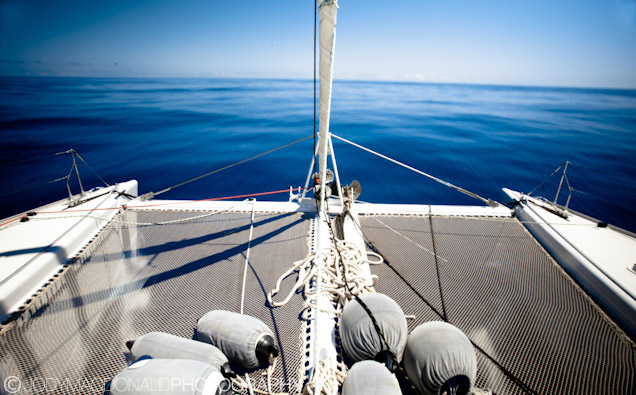 Discovery does not hold a lot of fuel. Our range, which is greatly influenced by current, wind and seas, is about 900 miles in perfect conditions, well short of the distance on a standard ocean passage. Our forecast as we left Cape Verde for the 1200 mile trip north showed almost no wind at all. Simple math meant we’d either have to get some wind, or we’d be doing some sitting around in the middle of the ocean. But no wind does have its benefits. For one, Jody actually gets to enjoy being at sea. Usually the passages for her are synonymous with suffering and I too admit that as the years have gone by my indifference to seasickness seems to be wearing off.
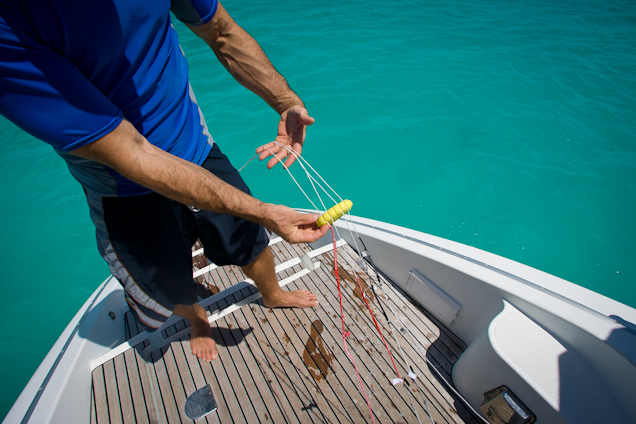 If you closely adhere to these steps, kiting sans beach becomes a safe, easy and fun alternative, and opens the world of offshore wind kiting which is often the best. We’ve never had a single incident (well, one slightly torn kite, but that doesn’t count!).
 A few days before the tsunami hit Japan and the horrors that followed life on board Discovery seemed to be almost on autopilot. Cape Verde had been serving up heaping platters of wind and waves and while my list of projects had grown beyond the boundaries of our “to do” whiteboard, none of them were all that critical. Well, other than replacing a prop, which had mysteriously fallen off. A three thousand dollar rather critical component vanished to the sea floor.
 The Cape Verdes lie in the path of this hazy swath which resembles the locust swarms we’d seen in Madagascar- thick and inescapable. But as soon as we left port on that first trip before the fall of the New Year another place and country began to take shape. … On the way to the guests’ hotel I made one final effort to find a portable generator I could run on deck (previous attempts had come up empty), struggling to communicate my need to the taxi driver using a mix of Spanish, English and very poor Portuguese, which was all he spoke.
 For once it wasn’t me who almost died. But I’m already getting ahead of myself.
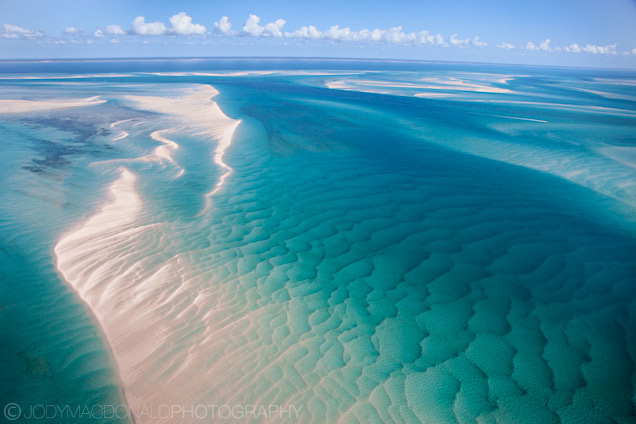 At the crack of dawn after a very rough night sail from Tofo 140 miles up the Mozambique coast to Bazaruto Tim wakes me up urgently. The problem is Humpbacks. The wind is blowing over 30 knots, the seas are an ugly black mess. And whales are literally everywhere. We’re ripping along well over 10 knots. If we hit one of these giants the giant wins. Our thin fiberglass hull is no match for 40 tonnes of dense flesh and blubber. We’d be destroyed, all would be lost. He and I stand at the helm in awe- everywhere we look massive black torpedos are defying gravity and breaching completely out of the water. I count over 50 individuals in 2 hours. Twice we have to shut off the autopilot and wrench the helm hard over to barely miss a jumping whale right in front of us. It was terrifying and yet of course awesome.